
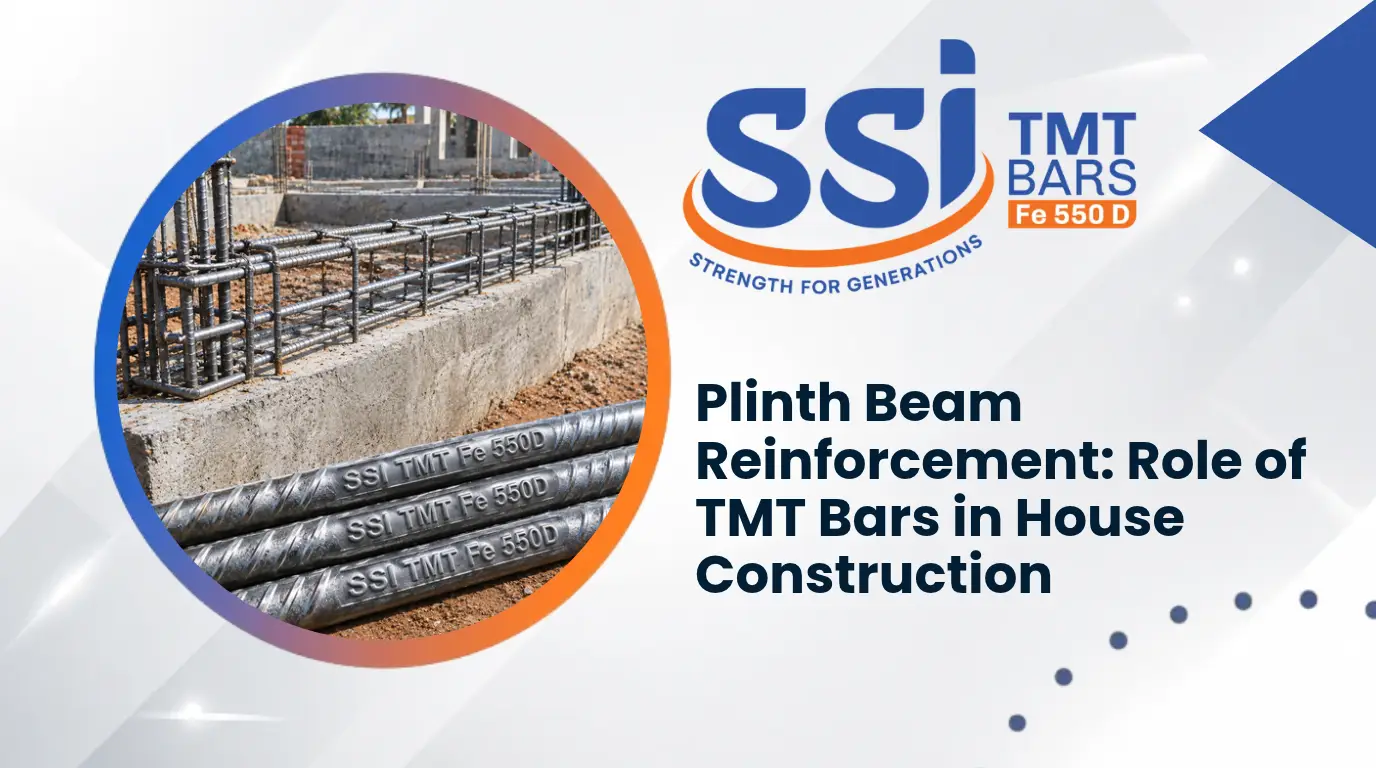
Everyone has a dream to build their own home at least once in their lifetime. Building a home is not just a normal dream for many, but one that gives them hope, strength and the confidence of owning something of their own. So, when a house is built, it starts with proper planning and a good foundation. But the overall strength of the construction also depends on the type of materials used. During this process, a plinth beam plays an important role by connecting the foundation and the walls. This helps in improving the stability of the structure.
Plinth beam reinforcement is an important part of this process, as it helps improve the beam’s strength and supports the overall stability of the house. Using the right TMT bars can help homeowners make better choices during construction.
What Is a Plinth Beam and Why Is It Important in House Construction?
A plinth beam is a horizontal concrete beam built at the plinth level, usually between the foundation and the walls of a building. It connects the supporting parts of the structure and provides a base for the walls built above it.
In house construction, a plinth beam serves several important purposes:
- Supports the walls: It provides a strong base for the walls built above the ground level.
- Distributes loads: It helps spread the load from the walls across the supporting structure.
- Helps reduce cracks: It can help reduce cracks in walls caused by uneven settlement when properly designed and reinforced.
- Improves stability: It connects the supporting elements and helps the building act as a more stable structure.
- Handles minor ground movement: It helps the structure manage certain stresses caused by minor soil movement.
A properly designed plinth beam is an important part of house construction. Its size, materials, and design should be decided based on the building’s structural requirements.
Why Is Plinth Beam Reinforcement Necessary?
A plinth beam needs proper reinforcement to withstand the loads and forces acting on it during the building’s lifetime. Concrete alone may not be enough to handle all these forces, which is why steel bars are added to improve its strength.
Here are some key reasons why plinth beam reinforcement is important:
- Helps handle heavy loads: Steel bars help the beam withstand the weight coming from the walls and other parts of the structure.
- Reduces the chances of cracks: Properly placed steel bars help the beam resist cracking due to bending and other structural forces.
- Supports the structure: It helps the plinth beam provide proper support to the walls and other structural elements.
- Handles minor ground movement: It helps the beam withstand certain stresses caused by minor soil movement or uneven settlement.
- Improves durability: When designed and placed correctly, steel reinforcement helps the beam perform well over the years.
The right combination of concrete and steel bars is important for a strong plinth beam. The reinforcement design, bar size and placement should always follow the structural engineer’s recommendations.
What Is the Role of TMT Steel Bars in Plinth Beam Reinforcement?
TMT steel bars play an important role in making plinth beams stronger and more durable. While concrete is good at handling compression, steel bars help the beam withstand tension and bending forces. Together, they provide the strength needed to support the structure.
Here are some ways TMT steel bars help in plinth beam reinforcement:
- Provides tensile strength: TMT bars help the beam withstand pulling forces that concrete alone cannot handle effectively.
- Offers flexibility: Their ductility allows them to bend under stress without breaking easily.
- Offers better bonding with concrete: The ribbed surface of TMT bars helps them bond well with concrete.
- Supports durability: Good-quality TMT bars help the beam maintain its strength over time when used with proper concrete cover and construction practices.
- Improves structural stability: They help the plinth beam perform as a connected and stable part of the building.
Choosing suitable TMT steel bars is important for achieving the required strength from a plinth beam. Their grade, size, and quantity should be selected based on the structural design.
How Is Plinth Beam Reinforcement Done During Construction?
Plinth beam reinforcement involves placing steel bars in the beam before concrete is poured. Each stage needs proper planning and execution to ensure the beam has the required strength.
The basic steps include:
- Preparing the area: The beam location is marked and prepared according to the building plan.
- Placing the steel bars: Main reinforcement bars are arranged as per the structural design.
- Fixing stirrups: Stirrups are tied around the main bars to hold them in position and help the beam resist shear forces.
- Providing concrete cover: Adequate space is maintained between the reinforcement bars and the outer surface of the beam to protect the steel from exposure.
- Setting up formwork: Shuttering is placed around the reinforcement to hold the concrete in the required shape.
- Pouring concrete: Concrete is poured into the formwork and compacted properly to avoid gaps and air pockets.
- Curing the beam: The concrete is cured properly to help it gain the required strength.
The reinforcement arrangement, bar diameter, spacing and concrete grade should always follow the structural engineer’s design. Proper execution at every stage helps ensure a strong and reliable plinth beam.
What Should You Consider When Choosing TMT Bars for Plinth Beam Construction?
Choosing the right TMT bars is an important part of building a strong plinth beam. The quality and suitability of the steel used can affect how well the beam performs over time. Here are a few important factors to consider:
- Steel Grade: Choose TMT bars with the grade recommended by your structural engineer to meet the building’s requirements.
- Strength and Ductility: Check whether the TMT bars offer the strength and ductility required for your construction project.
- Quality Standards: Check whether the bars meet the relevant BIS standards and applicable quality requirements.
- Surface Quality: Look for bars with a proper ribbed surface, as it helps create a good bond with concrete.
- Reliable Manufacturer: Choose TMT bars from a trusted manufacturer that follows proper quality checks and manufacturing practices.
Selecting suitable TMT bars and using them as per the structural design helps create a strong and reliable plinth beam. Always consult a qualified structural engineer before deciding on the bar grade, size and quantity.
Conclusion
Plinth beams are an important part of house construction, as they help connect the foundation and walls while supporting the overall structure. Using suitable TMT bars in plinth beam reinforcement helps improve strength, stability and durability. From selecting the right steel to following proper construction practices, every step matters when building a strong home.
When planning your house construction, choosing quality TMT bars from a reliable manufacturer like SSI is an important step. The right materials and proper construction practices can help you build with greater confidence.
Frequently Asked Questions
1. What is the main purpose of a plinth beam?
A plinth beam is used to connect the foundation and walls of a building. This supports the walls and improves the strength of the buildings.
2. Why are TMT bars used in plinth beams?
TMT bars offer strength for buildings and help plinth beams to handle tension and bending forces.
3. Is plinth beam reinforcement necessary for house construction?
Plinth beam reinforcement is commonly used to improve structural strength and stability during construction. The requirements of this beam are based on the design of the building and soil conditions.
4. Which TMT bar grade is suitable for plinth beam construction?
The suitable TMT bar grade is based on the building design and structural requirements. A structural engineer can recommend the right grade.
5. How does concrete work with TMT bars in a plinth beam?
Concrete handles compression, while TMT bars provide tensile strength. Together, they help the plinth beam withstand different structural forces.