
India is moving towards lower-carbon steel production, and Green Steel Certification provides a measurable way to identify steel manufactured with lower carbon emissions. For builders, contractors, engineers, and developers, understanding certification standards, emission limits, star ratings, and the verification process can help them make informed decisions when selecting sustainable steel.
India’s Green Steel framework sets clear criteria for classifying steel based on its carbon emission intensity. The certification process involves measurement, reporting, verification, and assessment to ensure that environmental claims are supported by verified data.
In this guide, we explore Green Steel Certification in India, how the certification process works, what different star ratings mean, how green steel certification differs from BIS certification, and what certified low-carbon TMT bars mean for construction projects.
What Is Green Steel and How Does It Work?
Green steel is made using processes that reduce carbon emissions compared to traditional steel production. It may use cleaner methods like hydrogen-based production or Electric Arc Furnaces (EAF).
Hydrogen-based steelmaking can reduce emissions when green hydrogen is used, while EAF technology uses electricity to melt scrap steel or other iron-bearing materials. When combined with renewable energy, these methods can help make steel production more sustainable.
With growing demand for sustainable construction in India, green steel is becoming an important choice for the future.
Key Benefits of Green Steel in Construction
Green steel is not just good for the environment; it also offers several benefits for construction projects.
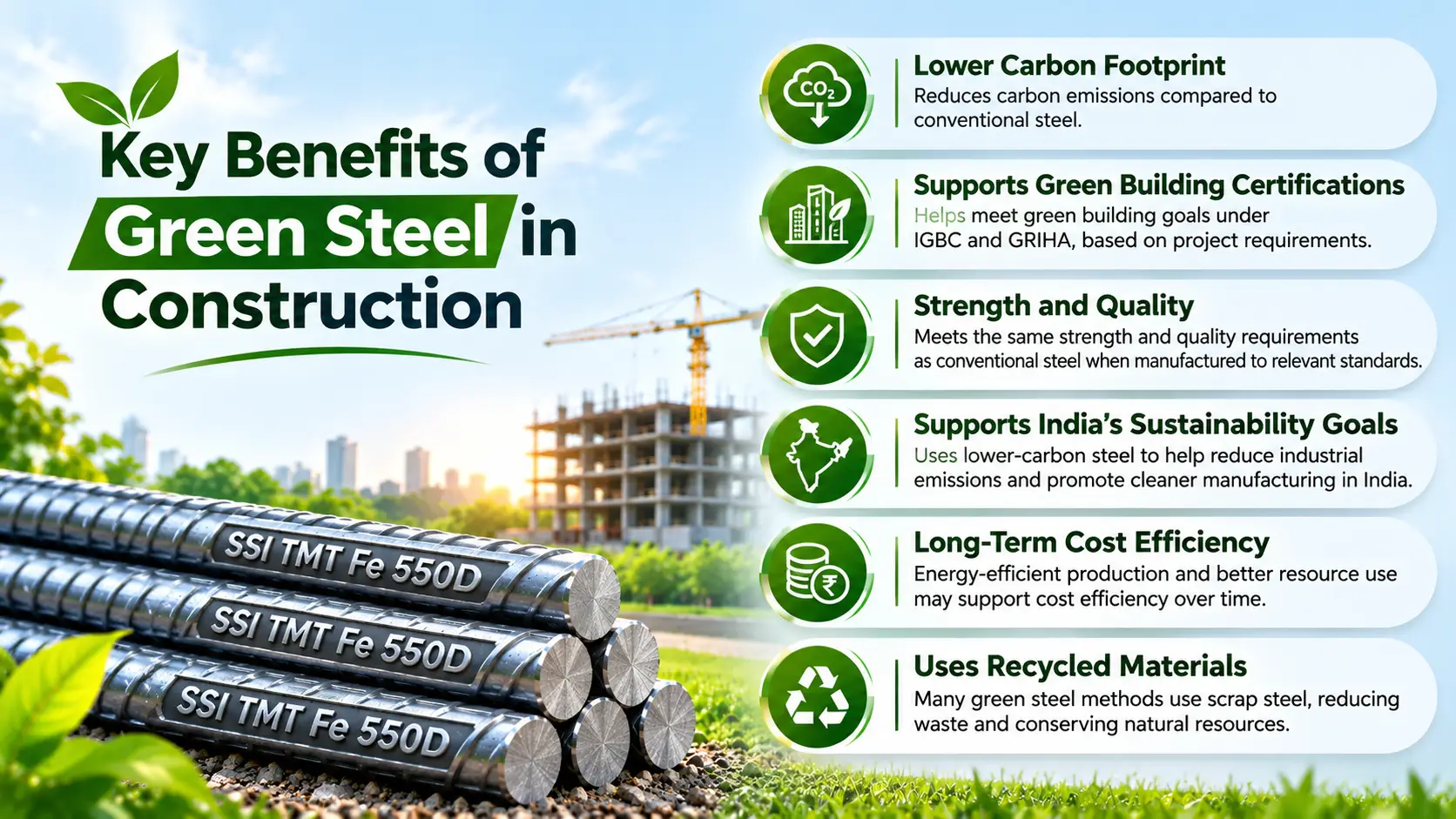
- Lower Carbon Footprint: Green steel can reduce carbon emissions compared to conventional steel, helping lower the environmental impact of large construction projects.
- Supports Green Building Certifications: Using eligible sustainable materials can support green building goals under certifications like IGBC and GRIHA, depending on project requirements.
- Strength and Quality: Green steel can meet the same strength and quality requirements as conventional steel when manufactured to the relevant product standards.
- Supports India’s Sustainability Goals: Using lower-carbon steel supports India’s efforts to reduce industrial emissions and promote cleaner manufacturing.
- Long-Term Cost Efficiency: Energy-efficient production and improved resource use may support better cost efficiency over time.
- Uses Recycled Materials: Many green steel production methods use scrap steel, helping reduce waste and conserve natural resources.
How Green Steel Supports Sustainability
Green steel plays an important role in making construction more environmentally friendly.
- Reduces Industrial Emissions: Cleaner steel production methods help reduce emissions at the manufacturing stage.
- Lowers Building Carbon Footprint: Using lower-carbon steel can reduce the embodied carbon of buildings and infrastructure.
- Encourages Renewable Energy: Green steel production can support greater use of renewable energy sources like solar and wind.
- Saves Natural Resources: Recycled steel can reduce the need for virgin raw materials.
- Promotes Responsible Construction: Choosing steel with verified environmental credentials encourages sustainable practices across the construction industry.
Also read: Green Buildings – For Sustainable Construction
Buy IGBC & GreenPro Certified TMT Bars
If you are planning a sustainable construction project, choosing the right TMT bars is important. SSI TMT Bars offers IGBC and GreenPro certified products, supporting buyers who consider environmental credentials alongside strength and quality. With a focus on reliable reinforcement for residential, commercial, and infrastructure projects, SSI TMT Bars help builders make informed material choices while meeting their construction requirements. Explore SSI TMT Green Steel to learn more about its green steel initiatives and sustainability-related product credentials.
SSI TMT Bars – Built Strong. Built Green. Built to Last.
Conclusion
Green steel is becoming an important part of sustainable construction in India. With defined emission limits, certification standards, and star ratings, Green Steel Certification helps buyers understand the environmental performance of steel.
By choosing suitable steel with verified environmental credentials, builders and developers can support sustainable construction while meeting their structural requirements. Green steel offers an opportunity to build responsibly and contribute to a cleaner future.