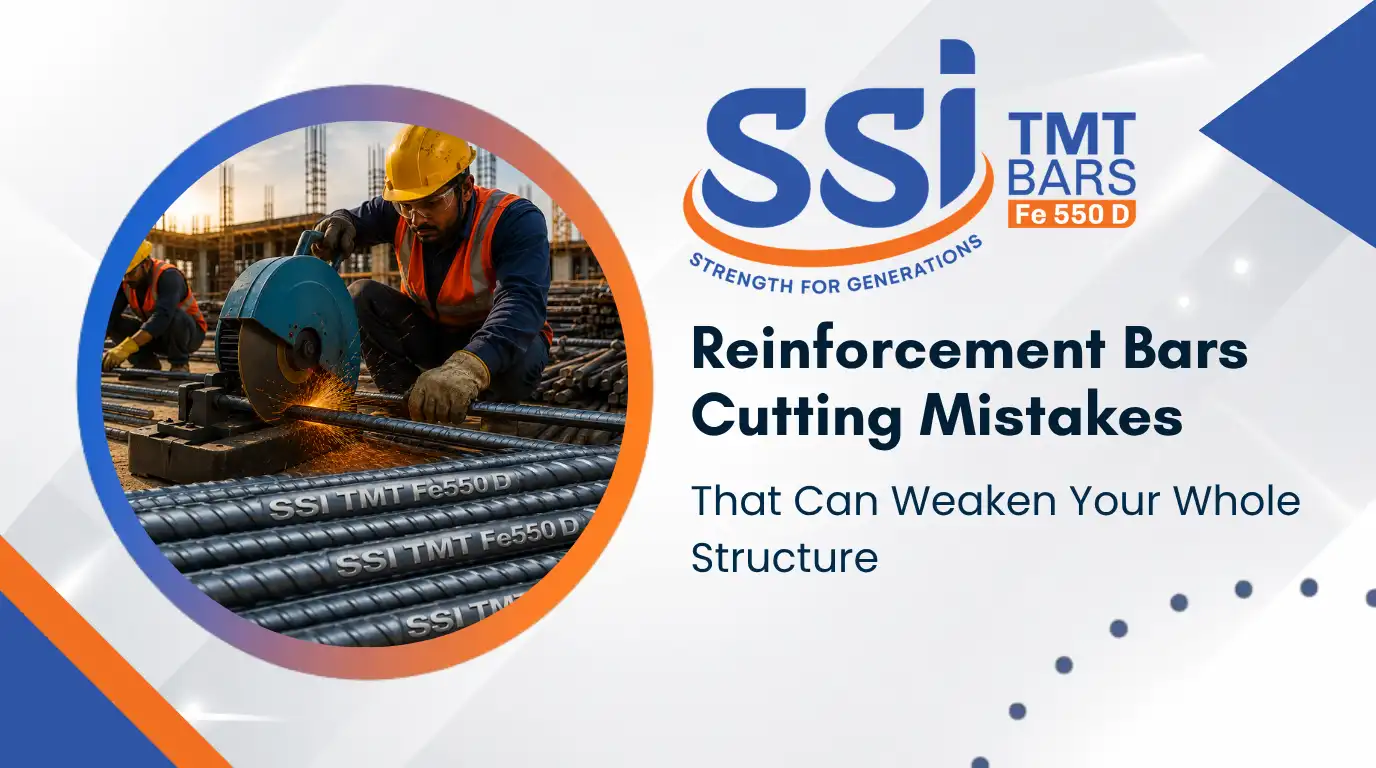
Reinforcement Bars Cutting Mistakes That Can Weaken Your Whole Structure
Cutting steel bars looks like a small job on any construction site. Just measure, mark, cut, done. But this “small job” decides how strong your final structure will be. Most reinforcement bars cutting mistakes happen not because workers don’t know the work, but because they rush through it. And once a bad cut goes into the concrete, nobody notices it until years later, when it’s too late to fix.
If you’ve spent any time on a site, you’ve probably seen it. A helper cutting bars in a hurry before lunch break. A bundle of TMT bars cut slightly short because someone read the tape wrong. These things happen more often than people admit, and they quietly add up.
Common Reinforcement Bars Cutting Mistakes On Site
Let’s go through the ones that show up again and again on almost every project.
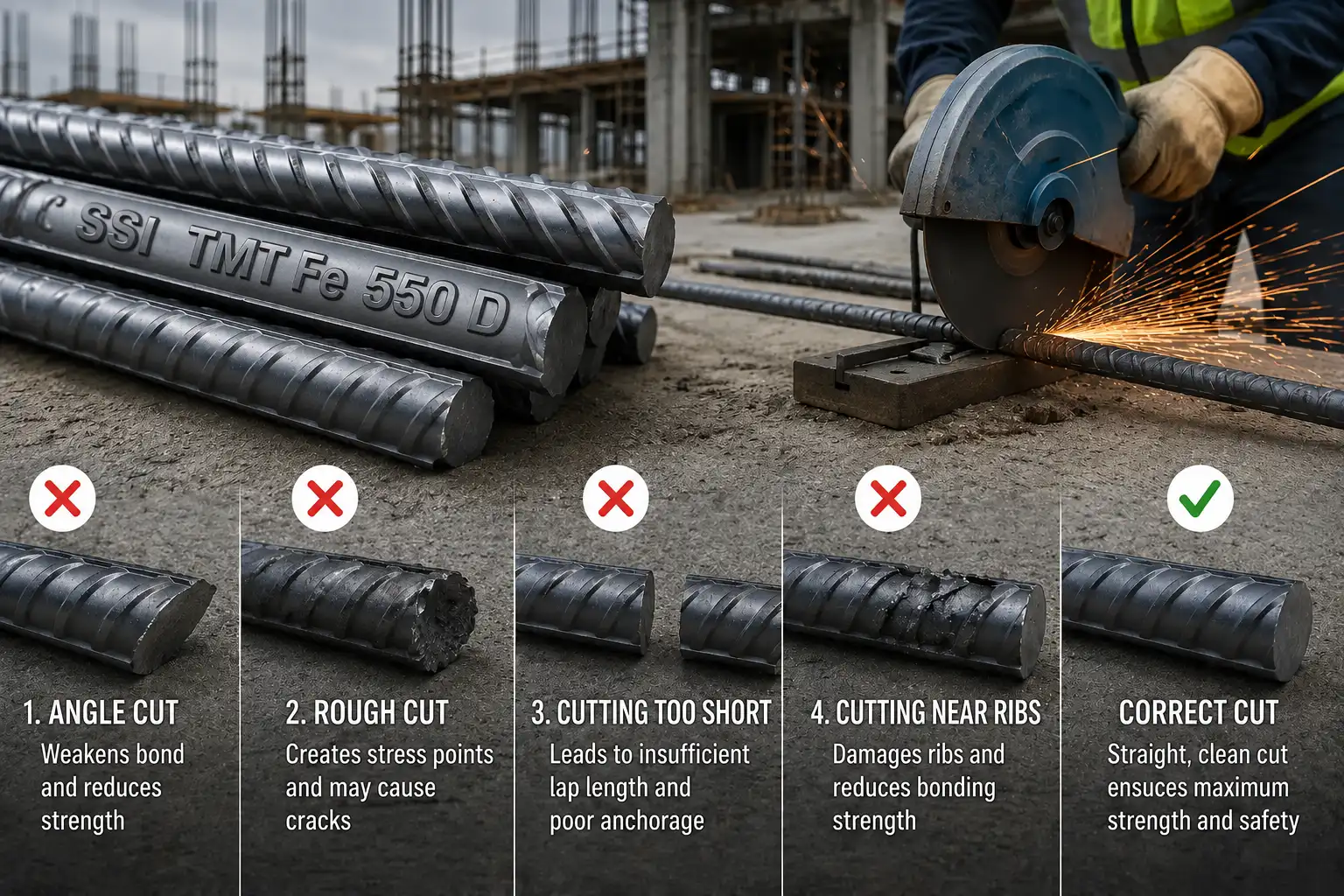
- Cutting without double-checking the measurement. This is the number one cause of rebar cutting errors. A worker measures once, cuts fast, and only later realizes the bar is 2-3 inches short. Now that bar is either wasted or forced into a joint where it doesn’t belong.
- Using a blunt or wrong cutting tool. Some sites still use hacksaws on thick TMT bars because the proper cutter is with another crew. This bends the bar edge, makes the cut rough, and takes three times longer than it should.
- Cutting at an angle instead of straight. A slanted cut looks fine from far away. But it reduces the contact area where the bar bonds with concrete. Over time, this weak bonding is exactly the kind of construction mistake in rebar that nobody can see from outside.
- Rough handling before and after cutting. Bars get thrown around, dragged on the ground, or stacked carelessly. This causes small bends and hairline cracks that are invisible at first but weaken the steel later.
- Skipping safety gear during cutting. No gloves, no goggles, sometimes not even proper footwear. Sparks fly, small steel pieces jump around, and injuries happen because of pure carelessness, not bad luck.
Why These Mistakes Are Actually Dangerous
Here’s the part many people miss. A building doesn’t fail because of one bad cut bar. It fails because ten, twenty, fifty small mistakes pile up across the project, and nobody tracked them.
A wrongly cut bar means less steel doing the job it was designed for. That section of the slab or column now carries less strength than the engineer calculated on paper. Add a slanted cut on top, and the bar doesn’t grip the concrete properly. Add a bent bar with a hidden crack, and you have a piece of steel that can snap under load instead of stretching and holding.
None of this shows up on the day of casting. It shows up years later, as a crack in the wall, a sagging slab, or worse. That’s the real cost of ignoring TMT bar cutting precautions on site.
Steel Bar Cutting Tips Every Site Should Follow
Avoiding these mistakes doesn’t need fancy equipment. It just needs a bit of discipline.
- Measure twice, mark clearly, cut once. Sounds basic, but it stops most rebar cutting errors before they happen.
- Use the right cutter for the bar size. A proper rebar cutter or shear machine gives a clean, straight edge every time.
- Keep cuts straight, not angled. A perpendicular cut bonds better with concrete and keeps the bar’s full strength intact.
- Handle bars gently. Don’t drag them, don’t throw them from the truck. Stack them properly so they don’t bend under their own weight.
- Check every bar after cutting. A quick look for cracks, bends, or rough edges takes ten seconds and saves a lot of trouble.
- Never skip gloves and goggles. It’s the cheapest insurance against an on-site injury.
One more thing worth saying: buy good quality TMT bars in the first place. Cheap, low-grade steel bends and cracks more easily during cutting, no matter how careful the worker is.
stronger structure with Proper cutting
Reinforcement bars cutting mistakes rarely look serious in the moment. It’s just a bar, just a cut, just five minutes saved by skipping a step. But construction doesn’t forgive shortcuts, it just delays the bill. For steel you can trust during cutting and installation Right TMT Bars provide consistent quality, strength and reliability. Train your team to slow down for this one step, use the right tools, and treat every bar like it matters, because it does. Get the cutting right, and everything you build on top of it stands a much better chance of lasting.