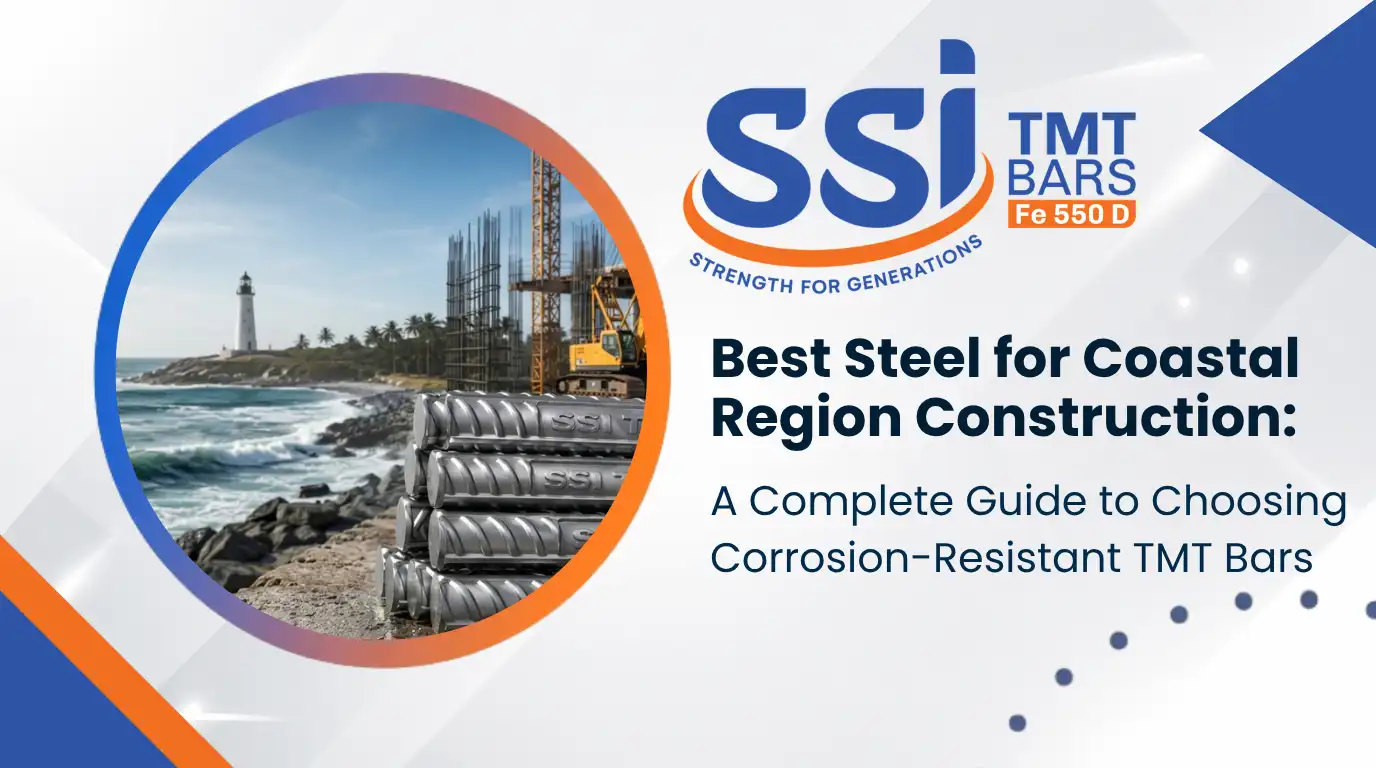
Building a home near the sea offers breathtaking views and a peaceful lifestyle. However, coastal environments also bring one major challenge: corrosion. The salty air, high humidity, and constant exposure to moisture can significantly reduce the lifespan of conventional steel if the wrong material is used.
That is why choosing the best steel for coastal region construction is one of the most important decisions you’ll make during your project. High-quality, corrosion-resistant reinforcement can help your building withstand harsh environmental conditions while reducing long-term maintenance costs.

Why Steel Rusts Faster Near Coastal Areas
Unlike inland regions, coastal locations are constantly exposed to salt-laden air. Tiny salt particles settle on exposed surfaces and combine with moisture to create an electrolyte that accelerates the corrosion process.
When steel begins to corrode, rust gradually expands and weakens the reinforcement hidden inside concrete.This creates Corrosion it is more than just a cosmetic issue. When reinforcement steel rusts, it expands.This expansion creates internal pressure within the concrete Since this damage occurs beneath the surface, homeowners often notice problems only after visible cracks begin to appear.
Several environmental factors contribute to faster corrosion in coastal regions:
- High salt concentration in the air
- Constant humidity
- Frequent rainfall
- High moisture retention
- Limited dry periods
For example, steel used in a house located near the shoreline will generally corrode much faster than steel used in a city, even if both buildings are constructed using the same materials.
What to Look for in Steel for Coastal Construction
Not every steel bar is suitable for coastal environments. Before purchasing steel, consider the following characteristics.
- Corrosion Resistance The most important feature is the ability to resist corrosion caused by salt and moisture. Corrosion-resistant TMT bars are specially designed for such conditions.
- High Strength Higher-grade TMT bars such as Fe550 and Fe550D provide better load-bearing capacity while maintaining structural safety.
- Superior Ductility Buildings located in cyclone-prone or earthquake-prone areas benefit from steel that can absorb stress without breaking.
- BIS Certification Always choose steel that complies with IS 1786 standards and is manufactured under strict quality control. Certified products ensure consistent mechanical properties and reliability.
- Trusted Manufacturer A reputable manufacturer follows advanced production processes, rigorous quality testing, and maintains consistent product performance.
Best Steel for Coastal Region Construction
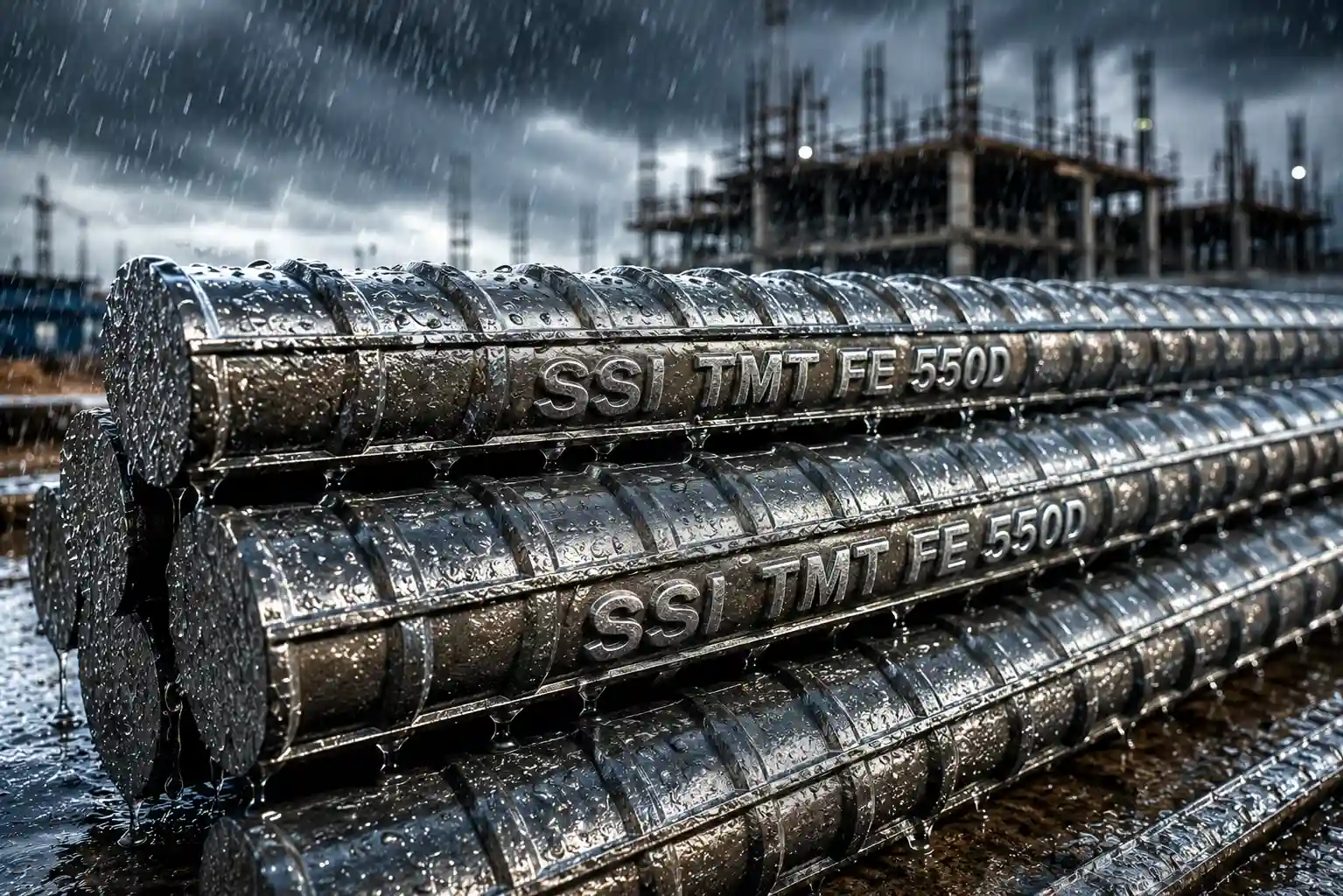
The most recommended choice for coastal construction is corrosion-resistant TMT bars, particularly Fe550D grades from trusted manufacturers.TMT (Thermo-Mechanically Treated) bars are produced through an advanced manufacturing process involving controlled heating and rapid cooling. This creates:
protective outer layer : Good steel bars have a hardened surface that acts like a shield against salt and moisture.
flexible inner core : This helps the steel bend slightly under pressure instead of snapping, which matters during storms or earthquakes.
Superior Weldability, Strength, and Earthquake Resistance : Structural steel combines excellent weldability with high tensile strength, allowing fabricators to create strong, reliable joints while using less material overall. This combination also boosts earthquake resistance; strong welds paired with steel’s natural ductility help structures absorb seismic energy instead of cracking under stress, making it ideal for coastal and earthquake-prone construction.
Comparison of Normal TMT Bars vs Fe550D TMT Bars for Coastal Construction
If you’re constructing a home or commercial building in a coastal region, choosing the right reinforcement bar is essential for long-term durability. The table below compares Normal TMT Bars and Fe550D TMT Bars based on the key factors that matter most in coastal environments, helping you understand which option offers better protection against corrosion, humidity, and continuous exposure to salty air.
Feature | Normal TMT Bars | Fe550D TMT Bars |
Corrosion Resistance in Coastal Areas | Good | Excellent |
Resistance to Salt-Laden Air | Moderate | High |
Crack Resistance | Good | Excellent (Higher Ductility) |
Durability in Humid Climates | High | Very High |
Maintenance Requirement | Moderate | Low |
Suitability for Seaside Homes & Buildings | Suitable | Highly Recommended |
Performance Under Continuous Coastal Exposure | Reliable | Superior |
Overall Choice for Coastal Construction | Good Option | Best Option |
Benefits of Using High-Quality Fe550D TMT Bars
Longer Structural Life Premium TMT bars improve the durability of your home’s framework and help maintain its structural integrity for decades.
Reduced Maintenance Costs Corrosion-resistant steel minimizes the need for frequent repairs caused by rust, concrete damage, and reinforcement deterioration.
Better Protection During Cyclones and Earthquakes High-strength TMT bars provide superior flexibility, enabling the structure to absorb heavy wind loads and seismic forces more effectively.
Improved Safety A strong reinforcement system protects the building from hidden structural weakening caused by corrosion.
Better Return on Investment Although premium TMT bars may cost slightly more initially, they significantly reduce repair expenses over the lifetime of the building.
Additional Tips to Prevent Corrosion in Coastal Buildings
Using quality steel is only one part of building a durable coastal structure. You should also:
- Use good-quality concrete with a low water-cement ratio.
- Ensure adequate concrete cover over reinforcement.
- Waterproof roofs and external walls.
- Seal construction joints properly.
- Carry out periodic maintenance inspections.
- Use proper drainage to prevent water stagnation.
Combining these practices with corrosion-resistant TMT bars greatly improves the lifespan of coastal structures.