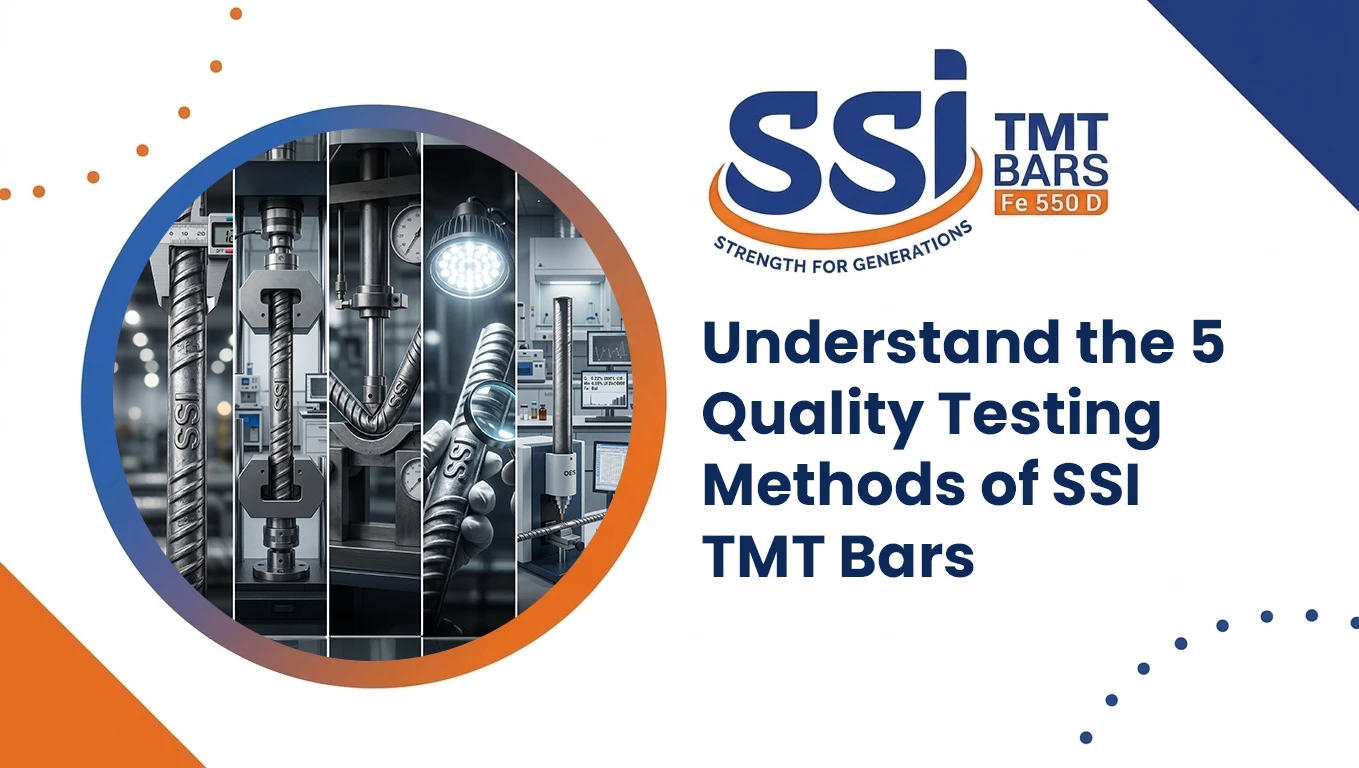
Everybody’s preference will be the products or materials that last longer. Especially, when it comes to building constructions, such as homes, business premises and factories – choosing the right material is indispensable. Buying TMT Bars, which are properly tested, can prevent the damages and reduce structural costs. To ensure the strength of reinforcement bars, SSI TMT Bars uses five quality testing methods – tensile testing, bend/re-bend testing, yield stress testing, visual inspection test, chemical composition analysis. As it was manufactured with Belgian tempcore technology as well allowing the SSI TMT Bars preferred choice for buyers and dealers. In this blog, we have given the information on the five quality testing methods of SSI TMT Bars.
1. Tensile Testing
Tensile testing checks how much pulling force the SSI TMT bar can handle before it breaks. A sample bar is placed in a machine and pulled slowly until it fractures. This helps measure both strength and flexibility. SSI TMT Fe 550D bars show high strength and good elongation, meaning they can handle heavy loads without sudden failure. This ensures better safety for buildings under stress.
2. Bend/Re-bend Testing
This test checks the flexibility and crack resistance of the TMT bars. In the bend test, the bar is bent up to 180 degrees to see if any cracks appear. In the re-bend test, the bar is heated, cooled, and bent again to simulate real site conditions. SSI TMT bars pass both tests without cracks. This proves they are highly ductile and safe for construction use.
3. Yield Stress Testing
Yield stress testing finds the point at which the bar starts to permanently deform. Before this point, the bar can return to its original shape after load is removed. SSI Fe 550D bars meet the required yield strength standards, ensuring they remain stable under normal loads. This helps structures maintain their shape and strength over time without damage.
4. Visual Inspection Test
In this test, experts carefully check each bar for surface defects like cracks, rust, or uneven finish. Even small visible defects can affect long-term performance. SSI TMT bars go through strict visual inspection under proper lighting conditions. Only bars with smooth and clean surfaces are approved. This ensures consistent quality and reliability in construction.
5. Chemical Composition Analysis
This test checks the exact mix of elements like carbon, sulphur, and manganese in the steel. The right balance of these elements ensures strength, flexibility, and corrosion resistance. SSI TMT bars are tested using advanced machines for quick and accurate results. Proper chemical composition also improves weldability on-site. This guarantees long-lasting performance in all environments.
Get the detailed guide on TMT Bars, its advantages and manufacturing process!
Get the Right TMT Bars to Construct Lasting Buildings!
Don’t take chances with the strength of your building, choose TMT bars that are tested for quality, durability, and safety. The right TMT bars ensure your structure can handle heavy loads, resist cracks, and last for decades without compromise. With proven performance in every test, SSI TMT bars give you the confidence to build strong and build right. Make the smart choice today for a safer, longer-lasting construction.
FAQs
Why are quality tests important for TMT bars?
Quality tests ensure that TMT bars are strong, flexible, and safe for construction. Properly tested bars can handle heavy loads and reduce the risk of cracks or structural failure. This helps in building long-lasting and safe structures.
What does tensile testing tell about TMT bars?
Tensile testing shows how much force a TMT bar can withstand before breaking. It also measures how much the bar can stretch without snapping. This helps confirm that the bar can handle stress without sudden failure.
What is the purpose of bend and re-bend testing?
Bend and re-bend tests check the flexibility and crack resistance of TMT bars. The bar is bent and re-bent under different conditions to simulate real construction scenarios. If no cracks appear, it proves the bar is durable and safe to use.
What is yield stress in TMT bars?
Yield stress is the point where a TMT bar starts to permanently change its shape under pressure. Before this point, the bar can return to its original form. Good yield strength ensures the structure remains stable under normal loads.
How does chemical composition affect TMT bar quality?
The right mix of elements like carbon and manganese improves the strength, flexibility, and corrosion resistance of TMT bars. It also makes welding easier at construction sites. Proper composition ensures long-term performance.
What is checked in the visual inspection test?
In visual inspection, experts look for surface defects like cracks, rust, or uneven finish. Even small defects can affect performance over time. Only bars with clean and smooth surfaces are approved for use.
Do SSI TMT bars undergo all these quality testing methods?
Yes, SSI TMT bars are tested using all five quality testing methods, including tensile, bend/re-bend, yield stress, visual inspection, and chemical analysis. Each batch goes through strict checks to ensure strength, flexibility, and durability. This testing process guarantees reliable performance in real construction conditions. That’s why SSI TMT bars are a trusted choice for building strong and long-lasting structures.