
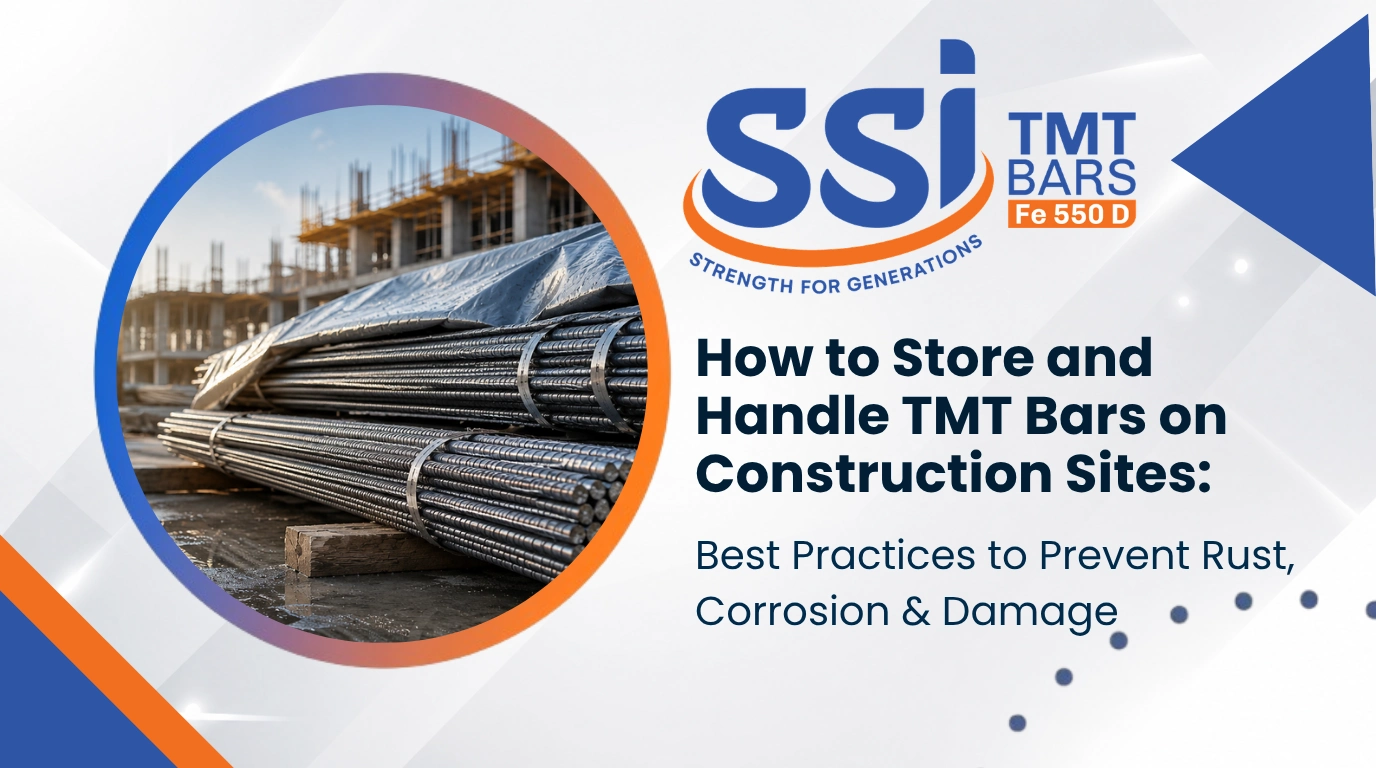
Even the highest-quality TMT bar can begin losing its performance before it is ever placed inside concrete if it is stored incorrectly. On many construction sites, improper stacking, rain exposure, and ground contact silently trigger rust and corrosion, leading to weaker structural bonding and avoidable project costs.
A lot of site workers and even some supervisors treat TMT bars like they’re indestructible. They are strong, yes. But they are not rust-proof if you don’t take care of them properly. In this blog, let’s understand the right way to store and handle TMT bars, so your construction work stays safe, strong, and cost-effective.
Why Proper Storage of TMT Bars Is Important
TMT bars are the backbone of any concrete structure. They give strength to columns, beams, slabs basically everything. Now imagine if these bars start rusting even before they are used. The rust weakens the bonding between steel and concrete. This means your structure becomes weak from day one, even if nobody can see it from outside.
This is very important to understand rust doesn’t just sit on the surface. Over time, it eats into the bar and reduces its strength. And once TMT bars are fixed inside concrete, you can’t just take them out and fix the problem. So proper TMT bars storage isn’t just a “nice to have” it directly affects the life of your building.
Common Mistakes on Construction Sites
Let’s be honest, most sites make these mistakes without even realising it:
- Bars kept directly on soil – Moisture from the ground travels straight into the steel, causing rust.
- No cover during rains – Bars left open in rain for days, and then just wiped and used that’s a big no.
- Bars mixed up with cement bags and sand – This leads to chemical reactions and physical damage.
- Overloading bars during transport – Bending, bruising, and coating damage happens because of rough handling.
- Storing bars near chemicals or fertilizers – These react badly with steel and speed up corrosion.
- No proper stacking Just piling bars anyhow, without any order, causes bending and uneven pressure.
Best Practices for TMT Bars Storage
Now let’s get into the practical part how to actually store TMT bars the right way.
1. Keep Bars Off the Ground
Never place TMT bars directly on soil or wet ground. Use wooden sleepers, concrete blocks, or steel supports to raise the bars at least 6 inches above ground level. This one small step prevents most of the moisture-related rust problems.
2. Store Under a Covered Shed
If possible, store bars inside a shed or under a proper roof. If a shed isn’t available, use tarpaulin sheets to cover the bars, especially during monsoon season. For example, if bars are left in rain for even two to three days without cover, you’ll start noticing rust spots forming.
3. Separate by Diameter and Grade
Don’t just dump all bars together. Keep 8mm, 10mm, 12mm, 16mm bars separately. This avoids confusion during use and also makes stacking easier and safer.
4. Avoid Ground Contact with Chemicals
Keep bars away from cement bags, fertilizers, acids, or any chemical storage area. These substances react with steel surface and cause faster corrosion.
5. Proper Stacking Method
Stack bars in a way that they don’t bend under their own weight. Use wooden battens between layers, and don’t stack too high this avoids bending and keeps the load even.
Best Practices for Handling TMT Bars
Handling is just as important as storage. Rough handling can damage the rib pattern and coating on bars, which affects bonding strength with concrete.
- Use proper lifting equipment – Avoid dragging bars on the ground; this scratches the surface and starts corrosion points.
- Don’t throw bars while unloading – Sounds obvious, but it happens a lot at busy sites. Throwing bars causes bends and surface damage.
- Train workers on basic handling – Even a simple 10-minute talk with site workers about careful construction material handling can save a lot of wastage.
- Use tying wires carefully – Sharp bends while tying can create weak points.
Tips to Prevent Rust and Corrosion in TMT Bars
Here are some real, practical tips that experienced site supervisors usually follow:
- Check bars weekly for any early signs of rust, especially during rainy season.
- If light rust appears, clean it off with a wire brush before use don’t ignore it thinking it’s “just surface rust.”
- Avoid storing bars for too long. Try to use older stock first (this is basically FIFO first in, first out).
- Keep the storage area well-ventilated. Stagnant, damp air speeds up corrosion.
- If bars are stored for a long duration, apply a thin protective coating recommended by the manufacturer.
Honestly, most rust problems on site happen simply because of negligence not lack of knowledge. A little discipline in storage and handling goes a long way in TMT bar corrosion protection.
Real-Life Practical Tips from Site Experience
Every experienced site engineer will tell you the first 15 days after bars arrive on site are the most critical. That’s usually when workers get careless because bars are “new” and look shiny, so nobody bothers about storage immediately. Big mistake.
Also, during monsoon, many sites forget to check tarpaulin covers regularly. Wind can shift the cover, leaving one corner of the bars exposed to rain. This small gap is enough to start rust formation.
Another practical tip always keep the storage yard slightly elevated and sloped, so water doesn’t collect around the stacked bars.
Conclusion
Choosing premium-quality TMT bars is only the first step. Proper storage, careful handling, and regular inspection ensure that the steel retains its designed strength until it becomes part of your structure. By following these simple practices, builders can improve safety, reduce material wastage, and extend the lifespan of every project.
FAQs
1.Why do TMT bars rust if they are supposed to be strong?
TMT bars are strong, but they are still made of steel. Without proper protection, moisture and air cause surface rust over time, just like any other steel product.
2. Can I use TMT bars that have light rust on them?
Yes, light surface rust can be cleaned with a wire brush before use. But if rust is deep or has caused pitting on the bar surface, it’s better to avoid using those bars.
3. How long can TMT bars be stored before use?
Ideally, TMT bars should be used within a few months. Longer storage increases the risk of rust, especially if not stored properly.
4. What is the best way to protect TMT bars from rain?
Cover them with tarpaulin sheets and store them under a shed if possible. Also keep them raised off the ground using wooden or concrete supports.
5.Does stacking TMT bars wrongly affect their strength?
Yes, wrong stacking can bend bars or create uneven pressure points, which weakens their structural performance later.
6. Is it okay to store TMT bars near cement bags?
No, it’s better to keep them separate. Chemical reactions and dust can affect the bar surface and speed up corrosion.
7.How often should TMT bars be checked for rust on site?
A weekly check is a good practice, especially during rainy or humid seasons.
8. Do all TMT bar brands need the same storage care?
Yes, storage and handling practices remain the same regardless of brand, since the risk of rust and damage depends on site conditions, not the brand itself.